
See What’s Really Going On Beneath the Surface
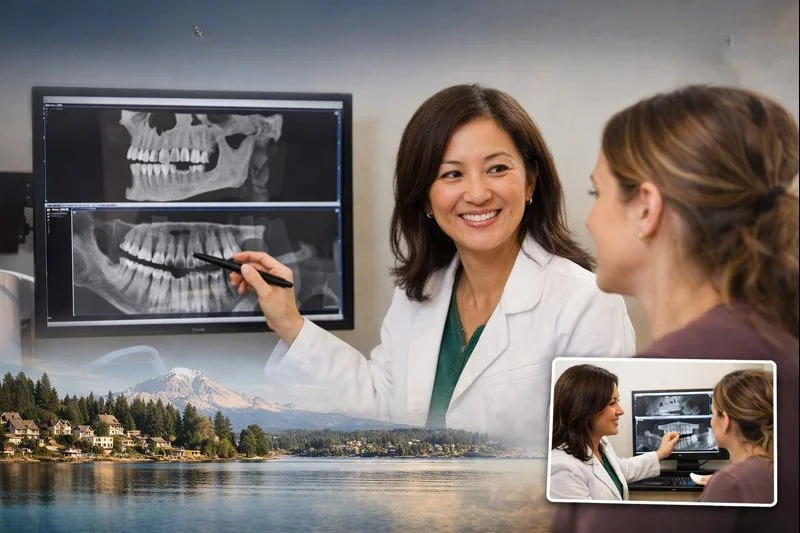
X-Rays, Imaging & Diagnostics in Bonney Lake help uncover hidden issues that often explain why dental problems keep coming back. Many people take good care of their teeth, yet still deal with lingering pain, repeat infections, or a feeling that something is being missed. The right imaging can bring clarity when surface-level exams do not tell the full story.
At Ecologic Dentistry, imaging is used thoughtfully and with purpose. Dr. Carla Yamashiro is known for a biologic, whole-body approach to dentistry and has been recognized as a Top Dentist and featured in Seattle Met Magazine. Her focus is on using advanced diagnostics to support informed decisions, not to overwhelm patients.
Why Dental Imaging Matters More Than Most People Think
Most people think dental imaging is only about finding cavities. While that is part of its role, imaging can also reveal problems below the surface that affect healing and long-term comfort. When those issues are missed, treatment can feel repetitive and incomplete.
Dental imaging helps show what the eye cannot see during an exam. Bone changes, hidden infections, and structural concerns may exist without causing obvious pain. Seeing these details early can change the direction of care.
Traditional Dental X-Rays vs 3D CBCT Imaging
Both traditional X-rays and 3D CBCT imaging are useful tools. The key difference is how much information each provides. When a flat image cannot answer the real question, a three-dimensional view can help.
| Imaging Feature | Traditional 2D X-Rays | 3D CBCT Imaging |
| Image type | Flat, two-dimensional | Three-dimensional view |
| Primary use | Cavities and basic bone levels | Bone, nerves, airway, and anatomy |
| Healing detail | Limited | Shows poorly healed areas |
| Safety planning | General estimates | Precise structure mapping |
| Airway insight | Not available | Airway size and restriction |
Traditional X-rays work well for many routine needs. CBCT imaging is used when more detail will meaningfully guide diagnosis or treatment.
“When I think about it, I don’t know how I took the pain. My jaw pain has reduced, facial imbalance is better, and there is less droopiness in my facial appearance. My orthotic helps a lot. There is less pressure on the side we are working on. On top of that, deep breathing practice has also helped. Both made a big difference. They worked out perfectly together.”
Step-by-Step: How Imaging Fits Into Your Visit
Advanced imaging should feel purposeful and calm. The process always begins with listening to your concerns and understanding your history. Imaging choices are then made based on those needs.
- Review of symptoms and past dental care
- Selection of appropriate imaging
- Digital scan when indicated
- Review of findings together
- Discussion of next steps
This approach helps connect images to real decisions. You leave knowing why imaging was used and what it revealed.
What Advanced Imaging Can Reveal Beneath the Surface
Some dental problems develop quietly, without pain or obvious warning signs. Bone defects, lingering infection, or healing issues can exist even when teeth look healthy during an exam. This is often why dental problems seem to return or never fully resolve.
Three-dimensional imaging allows a clearer view of bone and surrounding structures. It can reveal areas that did not heal properly after extractions or root canal treatment, as well as sinus involvement or subtle bone changes. Seeing these details early can change how care is planned.
Advanced imaging also provides insight into airway structure and bone quality at the same time. Jaw shape and tongue space affect breathing during sleep, while bone density influences healing and stability. Looking at these patterns together helps care feel informed instead of reactive.
A Clearer Path to Long-Term Oral Health

Frequently Asked Questions
Are dental X-rays and CBCT scans safe?
Dental X-rays and CBCT scans use focused, low-dose digital technology to gather important information efficiently. At Ecologic Dentistry, imaging is only recommended when it helps answer a specific clinical question or improves safety in planning care, and we follow a gentle imaging pledge to always use the least amount of radiation necessary.
Our CBCT machine is equipped with SAFE BEAM technology, which adjusts the dose based on each patient instead of using a one-size-fits-all setting. Before any scan is taken, the purpose is clearly explained so you understand why the image is needed and how it supports informed, thoughtful care.
What can a CBCT scan show that regular X-rays cannot?
A CBCT scan provides a three-dimensional view of the teeth, bone, nerves, TMJ, and airway that flat X-rays cannot capture. This added depth can reveal hidden bone defects, poorly healed areas, complex root anatomy, and airway narrowing that may explain ongoing symptoms. In many cases, this information helps guide safer treatment decisions and prevents issues from being missed.
When should I consider CBCT imaging?
CBCT imaging is often considered when symptoms do not match what standard X-rays show, or when treatment planning requires greater precision. It is commonly used for implant planning, complex extractions, unresolved discomfort, or evaluating past dental work that never fully healed. The scan is most valuable when the results will change how care is planned or improve overall safety.
Why is airway evaluation part of dental imaging?
The shape of the jaw and the position of the tongue influence how air moves during sleep. Dental imaging can estimate airway size and identify areas where space may be restricted, which can contribute to poor sleep or chronic fatigue. This type of evaluation is a screening tool, not a medical diagnosis, and it helps guide conversations about whether further evaluation may be helpful.
OR Call (253) 863-7005
18008 State Route 410 East, Suite A
Bonney Lake, WA 98391
Dr. Carla Yamashiro, The Holistic Dentist
Ecologic Dentistry, PLLC


Voted one of Seattle's Top Dentists seven years in a row